













Call tracking is a technology that allows businesses to track the source of phone calls by assigning a specific tracking phone number that forwards to your main phone number. For example, when implementing call tracking there would be a different tracking phone number assigned for Google Paid, Google Organic, Facebook Paid, Direct traffic, and more. Each time a call comes in for one of these specific sources, a JavaScript snippet placed on the website swaps the displayed phone number within milliseconds based on the traffic source. The visitor calls the business with no knowledge that they dialed a tracking number versus the main phone number. The source of the phone call is then captured to better understand the user.
Call tracking provides marketers detailed information about each call, including the caller's location, call duration, caller ID, and the specific marketing source that drove the call. This data empowers businesses to improve their marketing strategies and customer service. Call tracking can be fully integrated within web analytics to determine return on investment across advertising campaigns.
Example setup with dynamic number insertion.
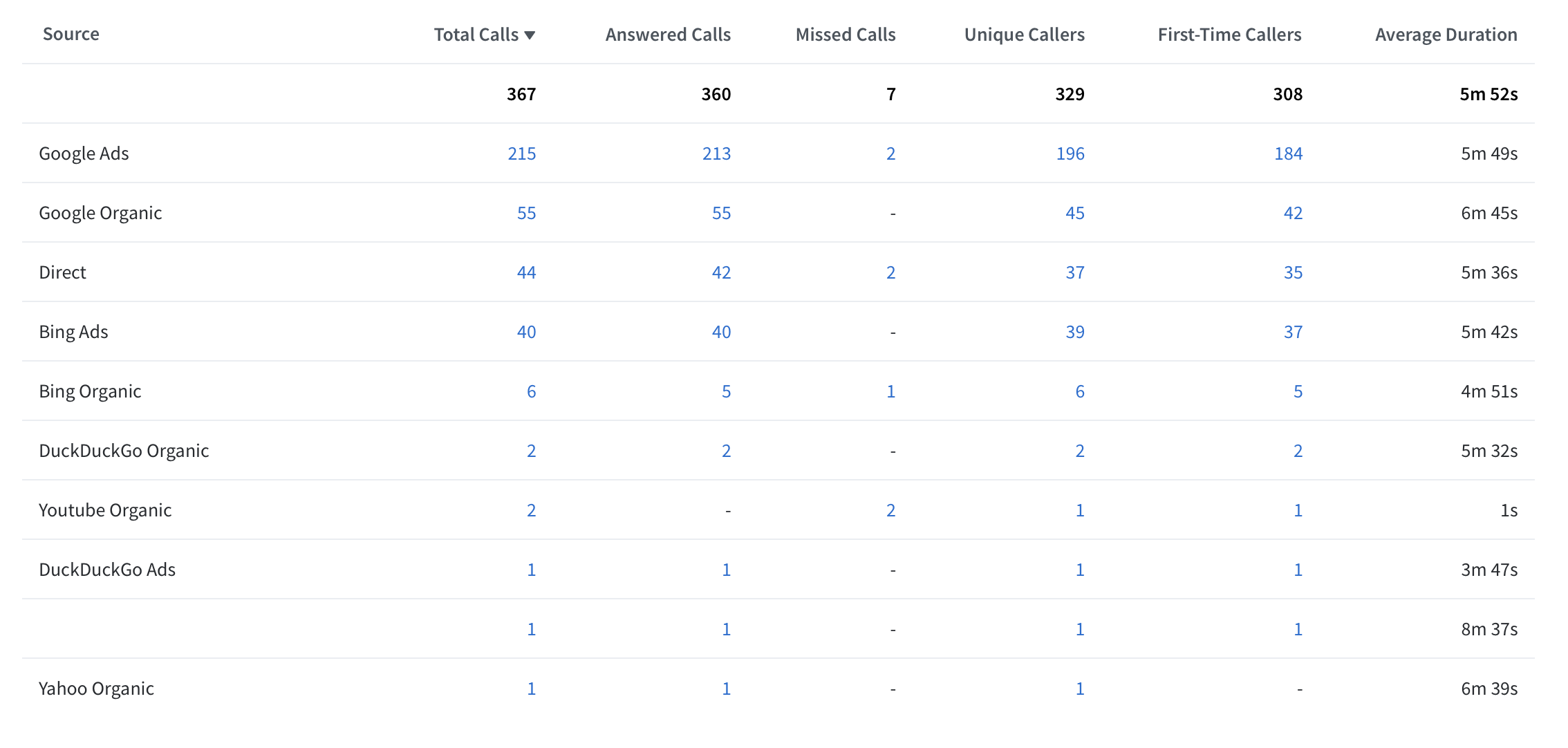
A call tracking report by source.
Call tracking can be useful for a wide variety of businesses. Any business that relies on phone calls as a primary form of communication and wants to track and determine the return on investment of their advertising campaigns should consider implementing call tracking.
Some of the typical businesses that use call tracking are:
Schedule a consultation now.
The cost of call tracking varies depending on the number of phone numbers being tracked, the features of the call tracking service (detailed analytics, call recording, contact form tracking, etc.), and the volume of tracked calls. If your business receives sales calls, the benefits of call tracking far outweigh the costs. Typically, call tracking services start at $40 per month for a baseline package that includes several assigned tracking numbers and a set number of tracked minutes per month. The more assigned tracking numbers and/or calls tracked, the higher the monthly bill.
Companies can limit the call tracking service to track only paid or offline calls to minimize expense. Businesses with multiple phone numbers on their website can also choose to track some or all numbers based on need. Call recording for customer service purposes is available as an add-on with most providers.
Smaller businesses might opt for a starter package with limited features, while larger businesses may prefer a more comprehensive package with enhanced features and greater call detail. When evaluating call tracking providers, compare costs and features carefully to determine the best fit for your business.
The number of phone numbers being tracked.
Detailed analytics, call recording, contact form tracking, etc.
The volume of tracked calls.
One of the most useful features of call tracking software is its integration with web analytics platforms, especially Google Analytics 4 (GA4). Connecting call tracking to your analytics account gives you one view of how online visitor behavior turns into phone call conversions, closing the loop between your digital marketing and real business results.
When call tracking is integrated with Google Analytics, each inbound call is sent to GA4 as a conversion event, just like a form submission or an ecommerce purchase. The integration passes call data (source, medium, campaign, keyword, call duration and caller location) from the call tracking platform into GA4 in real time. This allows marketers to:
Example call data flow.
Dynamic number insertion (DNI) is the underlying mechanism that makes this integration work. A short JavaScript snippet placed on every page of your website detects the visitor's traffic source and swaps the displayed phone number to a unique tracking number assigned to that source. When a call is placed, the platform records the session data and fires a call event into GA4, associating the call with the visitor's full browsing session.
This visibility is especially valuable for businesses running Google Ads. When you import call conversions into Google Ads from your call tracking platform, Smart Bidding can optimize for actual phone calls, not just online form leads, which improves campaign performance over time.
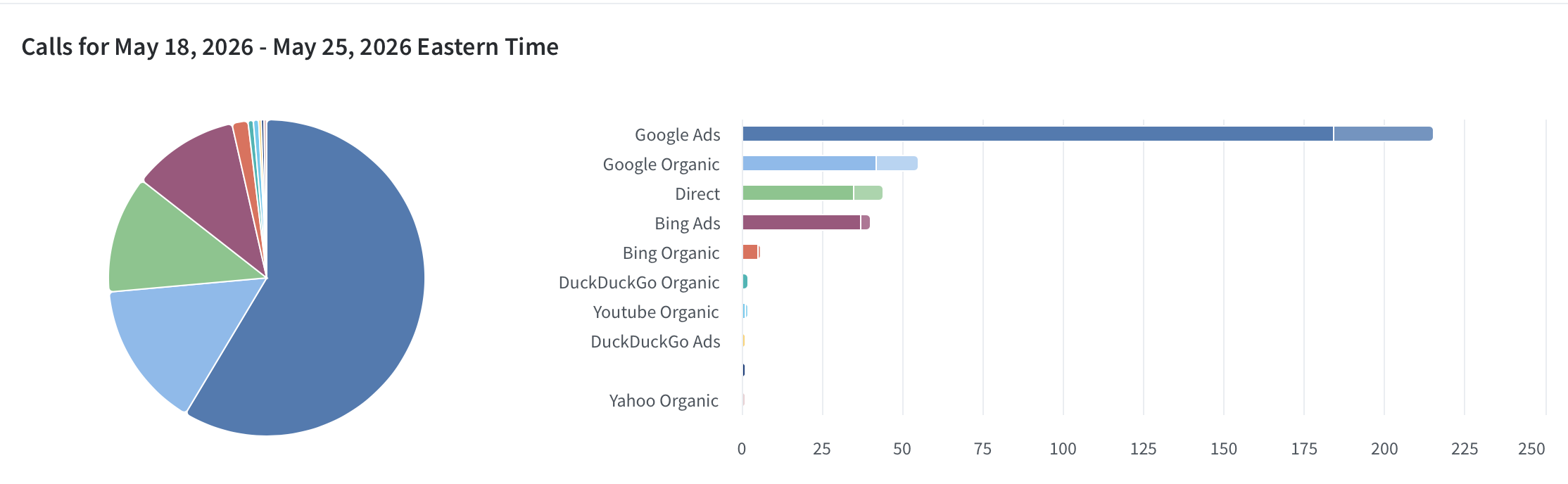
Calls by source over one week.
CallRail is one of the most widely used call tracking platforms for small and mid-sized businesses, marketing agencies, and multi-location brands. Founded in 2011 and headquartered in Atlanta, Georgia, CallRail has grown from a basic inbound call tracking tool into a comprehensive lead intelligence platform that includes form tracking, conversation intelligence (AI-powered call analysis), and business communications features.
Assign unique tracking numbers to each marketing source (Google Ads, organic search, social media, offline campaigns) and capture full attribution data for every inbound call.
Automatically swap phone numbers on your website based on visitor source using a lightweight JavaScript snippet.
Record inbound calls and receive AI-generated transcripts, enabling quality assurance and coaching of sales and service teams.
Use AI to score leads automatically, spot keywords mentioned on calls and flag calls that need follow-up, without listening to every recording.
Track web form submissions alongside calls to get a complete picture of all inbound leads from every marketing channel.
Map calls and form submissions across multiple touchpoints in a customer's journey, from first click to final conversion.
Send call events directly to GA4 and import call conversions into Google Ads to power Smart Bidding campaigns.
Sync call data with your CRM so sales teams have full lead context without switching platforms. HubSpot services →
Identify which specific paid search keywords are driving phone calls, enabling granular bid optimization in Google Ads.
CallRail is particularly popular among digital marketing agencies managing PPC campaigns for clients. Its white-label reporting and multi-client dashboard make it easy to demonstrate call ROI, while the GA4 and Google Ads integrations allow campaign managers to feed call conversion data back into campaign optimization automatically.
CallRail also powers our AI Receptionist service: Voice Assist answers every call your tracked numbers receive, qualifies the lead and books the appointment, day or night.
CallRail data shows that, on average, 28 percent of business calls go unanswered.
Example call flow.
CallRail uses a subscription-based pricing model with four main tiers, ranging from $50 to $195 per month (as of 2026). Each plan includes a base allocation of local tracking numbers and minutes; usage beyond the included amounts is billed at per-number and per-minute overage rates. CallRail does not offer a free plan, but all plans come with a 14-day free trial.
The entry-level plan for businesses that need core call attribution. Includes dynamic number insertion, call recording, and source-level tracking. Best for small businesses or those new to call tracking.
Adds AI-powered call transcription, keyword spotting, automated call scoring, and lead classification on top of the core tracking features. Ideal for sales teams that want to improve call quality and conversion rates without manually reviewing every recording.
Combines call tracking with web form tracking so you can attribute every inbound lead, phone calls and form fills alike, to the right marketing source. Best for businesses that get a meaningful share of their leads through contact forms as well as calls.
The all-in-one plan that includes call tracking, form tracking, and conversation intelligence. Designed for businesses and agencies that want full lead intelligence across every inbound channel in a single platform.
Ready to implement call tracking? Schedule a consultation now.