

What Is Google AI Mode?
Over the years, Google has evolved from showing traditional "ten blue links" to offering featured snippets, rich results, shopping modules, local results, AI Overviews, and increasingly conversational search experiences.
Google AI Mode represents the next stage of that evolution.
Instead of entering a simple keyword and navigating through a list of results, users can ask detailed questions, receive a synthesized response supported by web sources, and continue asking follow-up questions without starting a completely new search.
According to Google's explanation of how AI Mode works, the system can break complex questions into multiple subtopics, search for relevant information across the web, and generate a response that includes links to supporting websites.
For businesses investing in SEO, this changes how organic visibility needs to be evaluated.
The implications are significant:
- Being included as a source can matter alongside traditional rankings
- Searchers can use longer and more conversational queries
- Users can ask multiple follow-up questions within the same search journey
- Google can surface sources from different parts of the web depending on the specific subtopic
- Organic visibility increasingly extends beyond traditional blue-link rankings
AI-powered search is no longer an isolated experiment. Google continues to expand and refine AI Mode and AI Overviews as core parts of the Search experience.
How AI Mode Is Changing Search Behavior
AI Mode changes not only what Google displays, but also how users interact with Search.
Google has reported that users are asking longer and more complex questions through AI-powered Search and using the experience to explore topics that would previously have required multiple separate searches.
That creates several important changes for SEO.
Longer, More Specific Queries
Users can now ask detailed questions containing multiple requirements rather than reducing their needs to a few keywords.
Instead of searching:
basement waterproofing
A user might ask:
What is the best way to waterproof a basement with clay soil, and how much should I budget for the project?
Content that comprehensively addresses the underlying task may therefore have more opportunities to appear than content built around one isolated keyword.
Fewer Separate Searches
AI Mode allows users to ask follow-up questions while maintaining context.
A search journey that previously required five or six separate Google searches may now happen within one conversational experience.
This means pages that answer only the most basic version of a question may have fewer opportunities to earn a click.
Greater Importance of Source Visibility
Google AI Mode and AI Overviews include links to websites that support generated responses.
Google continues to make changes designed to surface relevant websites and original content within AI search experiences.
For brands, this creates another important organic objective: becoming one of the sources Google considers useful enough to include within its AI-powered results.
How AI Mode Can Create New Organic Search Opportunities
AI-powered search creates legitimate challenges for traditional organic traffic, but it also introduces new opportunities.
AI Search Creates New Visibility Surfaces
Google AI Mode does not generate answers completely independently of the web. It searches for and references external resources that can help users explore a subject in more depth.
If your content is included, your brand can gain visibility even when the user does not initially begin with a traditional website result.
That creates opportunities for:
- Brand exposure
- Referral traffic
- Assisted conversions
- Authority building
- Discovery for niche topics
- Visibility for long-tail searches
Detailed and Niche Content Can Benefit
AI Mode is particularly useful for complex queries involving comparisons, recommendations, planning, and multi-step questions.
This creates opportunities for businesses with genuine expertise in narrow or technical subjects.
Instead of competing only for broad terms, brands can create highly specific resources that answer the detailed questions customers actually ask.
Strong content might include:
- Original research
- Expert commentary
- Case studies
- Product testing
- First-hand experience
- Industry-specific data
- Detailed comparisons
- Local expertise
These signals also align closely with Google's emphasis on helpful, trustworthy, people-first content.
Clicks May Carry Stronger Intent
Users who click through after interacting with an AI-generated answer may already understand the basic subject.
That means the visitor may arrive looking for:
- More detailed information
- Proof or supporting evidence
- A product
- A service provider
- Pricing
- A consultation
- A specific next step
For businesses, this means raw traffic volume should not be the only metric used to evaluate AI search.
Conversions, lead quality, engagement, and assisted revenue may become increasingly important.
The Risks AI Mode Creates for Traditional SEO Traffic
AI-powered search also changes some assumptions behind traditional SEO strategies.
More Zero-Click Searches
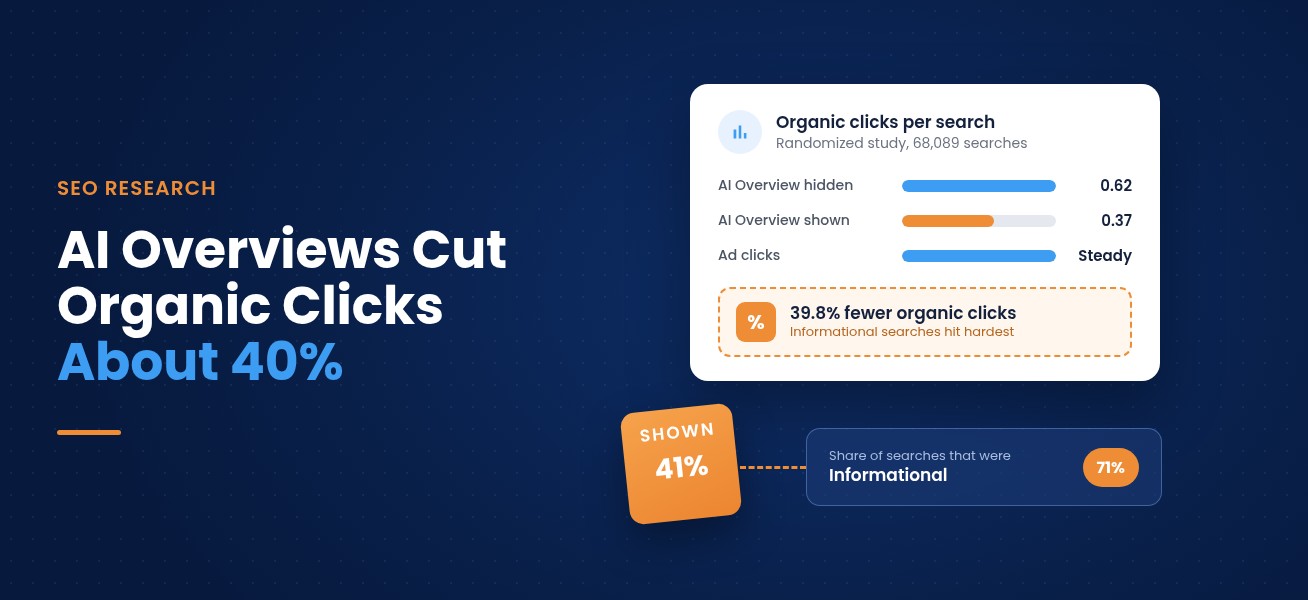
If Google can answer a basic informational question directly within AI Mode or an AI Overview, the user may not need to visit another website.
Generic informational content is particularly exposed.
Pages that simply summarize information already available across hundreds of other websites provide fewer reasons for users or AI systems to select them.
Greater Competition for Source Inclusion
Traditional search results can display many organic listings.
AI-generated answers may reference a smaller selection of sources for a particular response.
That increases the importance of demonstrating why your page deserves inclusion.
Useful differentiators include:
- Original data
- Subject-matter expertise
- Unique research
- First-hand experience
- Strong supporting evidence
- Clear sourcing
- Better organization
- More complete answers
Search Traffic Becomes Harder to Forecast
A simple historical model might have looked like:
Ranking position → Click-through rate → Organic traffic
AI search makes that relationship less predictable.
A page might receive visibility through:
- Traditional organic results
- AI Overviews
- AI Mode
- Image results
- Local results
- Shopping features
- Other Google Search surfaces
SEO reporting therefore needs to evaluate more than rankings alone.
Search Console Now Provides More AI Search Data
One important development for marketers is Google's expansion of Search Console reporting for AI-powered results.
Google now explains how clicks, impressions, and positions are counted for AI Mode and AI Overviews.
Google has also introduced a dedicated generative AI performance report in Search Console, giving website owners more visibility into impressions generated through AI Overviews and AI Mode.
This makes it increasingly practical to monitor AI search visibility alongside traditional organic performance.
Businesses should begin tracking:
- AI search impressions
- AI search clicks
- Pages appearing in generative search
- Organic conversions
- Engagement after AI-driven visits
- Changes in informational-query traffic
- Brand search growth
- Assisted conversions
The objective is to understand how organic discovery is changing, not simply whether total organic sessions increased or decreased.
What Makes Content More Useful for AI Search?
Traditional SEO often asks:
How can we rank higher for this keyword?
AI-powered search adds another question:
Why should Google's systems use our website as a supporting source?
Several characteristics can improve your chances of creating content useful to both users and AI-powered search systems.
Demonstrate Trust
Include signals that help users understand who created the content and why they should trust it.
Examples include:
- Author biographies
- Professional credentials
- Editorial standards
- Citations
- Primary sources
- Company information
- Contact information
- Updated publication dates
Demonstrate Experience
First-hand information makes content more distinctive.
Consider including:
- Real project examples
- Original photographs
- Testing methodology
- Case studies
- Customer outcomes
- Screenshots
- Internal data
- First-hand observations
Publish Original Information
If your article simply rewrites what already exists online, there is little reason for Google or an AI system to prefer it.
Original information can include:
- Surveys
- Benchmarks
- Research
- Statistics
- Proprietary frameworks
- Experiments
- Industry analysis
- Unique expert opinions
Use Clear Content Structure
Content should be easy for users and search systems to interpret.
Use:
- Descriptive headings
- Short paragraphs
- Lists
- Definitions
- Step-by-step instructions
- Comparison sections
- Clear conclusions
- Relevant internal links
Complex information should be organized logically rather than buried inside long blocks of text.
Build Pages Around Tasks, Not Just Keywords
Keyword research remains useful, but AI search makes search intent even more important.
Instead of creating pages around isolated keyword variations, identify the full task the user wants to accomplish.
For example, someone searching:
What does it cost to replace a 3-ton HVAC system in Phoenix?
may need information about:
- Typical price ranges
- Local climate considerations
- Equipment efficiency
- SEER2 requirements
- Ductwork
- Labor
- Permits
- Rebates
- Warranties
- Seasonal demand
A strong page answers the complete question rather than repeating "3-ton HVAC replacement Phoenix" several times.
The same principle applies across industries.
Healthcare Example
Dry needling vs. physical therapy for sciatica: which is better?
A useful resource might include:
- Differences between treatments
- Appropriate use cases
- Contraindications
- Evidence from medical research
- Expected treatment timelines
- Clinician credentials
- Insurance considerations
B2B Example
Build vs. buy for SOC 2 compliance automation?
Useful content might contain:
- Implementation timelines
- Internal staffing requirements
- Maintenance costs
- Security considerations
- Total cost of ownership
- Decision criteria
- Real customer examples
E-Commerce Example
Best trail-running shoes for overpronation on wet terrain
Useful information might include:
- Foot type
- Terrain
- Cushioning
- Heel-to-toe drop
- Weight
- Fit
- Grip
- Waterproofing
- Real-world testing
- Product photographs
Specificity gives both users and search systems more useful information to work with.
Use Structured Data Where It Is Relevant
Structured data can help Google understand entities and specific types of information on your website.
Relevant implementations may include:
- Organization
- LocalBusiness
- Product
- Article
- Person
- BreadcrumbList
- Event
- VideoObject
Google maintains a current list of structured data features supported by Google Search.
Structured data should accurately reflect visible page content and should not be added merely because a schema type exists.
Older SEO recommendations frequently suggested FAQPage and HowTo structured data specifically to generate rich results. Those recommendations are outdated because Google has discontinued those rich-result experiences for general Search.
Strengthen Visible Experience Signals
Businesses should make genuine experience easy to identify.
Useful content modules might include:
- What We Tested
- How We Tested It
- Our Methodology
- What We Found
- Project Results
- Before and After
- Customer Results
- What We Learned
For local businesses, that may mean publishing:
- Team photographs
- Completed projects
- Local case studies
- Before-and-after galleries
- Customer reviews
- Location-specific examples
For product companies, it may mean:
- Original product photography
- Testing results
- Product comparisons
- Customer Q&A
- Detailed specifications
- First-party reviews
These assets help distinguish original expertise from generic content.
Keep Content Accurate and Current
AI-powered search increases the importance of maintaining factual accuracy.
Pages containing outdated information about:
- Pricing
- Regulations
- Technology
- Products
- Statistics
- Policies
- Services
can lose usefulness quickly.
Create a regular content-maintenance process that includes:
- Reviewing important pages
- Updating statistics
- Checking external links
- Updating product information
- Reviewing structured data
- Refreshing outdated examples
- Adding new first-party evidence
Prioritize pages based on their business value rather than trying to refresh every page equally.
Link Building Still Matters
AI-powered search does not eliminate traditional authority signals.
Relevant links from reputable websites can continue to strengthen a site's authority, reputation, discovery, and organic performance.
The emphasis should remain on quality rather than quantity.
Useful links can come from:
- Industry publications
- Professional organizations
- Local publications
- Relevant blogs
- Business partners
- Original research citations
- Digital PR
- Expert commentary
A smaller number of genuinely relevant links is typically more valuable than large volumes of low-quality placements.
Local SEO and AI Search
Local businesses should continue strengthening the fundamental signals Google uses to understand their businesses.
That includes:
- Accurate Google Business Profile information
- Correct business categories
- Services
- Opening hours
- Photos
- Reviews
- Booking links
- Consistent business information
- Location and service-area pages
- Local case studies
Strong local SEO makes it easier for Google to understand what your business does, where it operates, and when it is relevant to a local searcher.
E-Commerce and AI Search
E-commerce websites should provide detailed, accurate product information that helps both users and search systems understand their inventory.
Useful information includes:
- Detailed product specifications
- Pricing
- Availability
- Original product images
- Customer reviews
- Product comparisons
- Shipping information
- Warranty information
- Return policies
- Product Q&A
Thin manufacturer descriptions provide little differentiation.
Unique product information and first-party customer data create much stronger content assets.
Technical SEO Still Matters
AI-powered search does not replace technical SEO.
If Google cannot reliably crawl, understand, and index your website, content quality alone cannot solve the problem.
Continue focusing on:
Crawlability and Indexation
- Maintain clean XML sitemaps
- Remove unnecessary crawl barriers
- Fix orphaned pages
- Manage duplicate URLs
- Control unnecessary URL parameters
- Maintain proper canonicalization
Performance
- Monitor Core Web Vitals
- Optimize images
- Reduce unnecessary JavaScript
- Prevent significant layout shifts
- Maintain responsive layouts
Entity Clarity
Use consistent:
- Business names
- Author names
- Product names
- Service names
- Internal anchor text
- Structured data
Accessibility
Maintain:
- Logical heading hierarchy
- Descriptive alt text
- Accessible forms
- Keyboard navigation
- Video transcripts where appropriate
Security
Use HTTPS throughout the site and maintain secure forms and user experiences.
The fundamentals of technical SEO become more important, not less, when search systems need to retrieve and interpret information efficiently.
How to Prepare Your SEO Strategy for AI Mode
Businesses do not need to rebuild their entire SEO strategy overnight.
Start with your highest-value opportunities.
1. Identify Important AI-Friendly Queries
Find questions in your market that involve:
- Comparisons
- Pricing
- Recommendations
- Multi-step processes
- Complex decisions
- Local considerations
- Product research
2. Upgrade Your Most Important Pages
Choose several cornerstone pages and improve them with:
- Direct answers
- Better structure
- Original information
- Expert bylines
- Current data
- Case studies
- Images
- Comparisons
- Supporting sources
3. Improve Entity Signals
Make it easy to understand:
- Who your organization is
- What you specialize in
- Who your experts are
- Which locations you serve
- How your topics relate to each other
4. Add Visible Credibility
Include:
- Author credentials
- Testimonials
- Case studies
- Awards
- Certifications
- Original research
- Update dates
- Methodology
5. Create Something Worth Citing
Develop at least one asset competitors cannot easily duplicate.
Examples include:
- Original surveys
- Industry benchmarks
- Calculators
- Data studies
- Regional statistics
- Research reports
- Original testing
6. Strengthen Internal Linking
Organize related content into clear topical clusters and connect pages with descriptive internal links.
7. Update Your Reporting
Do not measure success solely through ranking positions.
Track:
- AI search visibility
- Organic clicks
- Search impressions
- Conversions
- Lead quality
- Engagement
- Branded search
- Assisted conversions
Google's newer Search Console reporting for generative AI can help businesses understand how their websites appear within AI-powered Search.
Frequently Asked Questions About Google AI Mode
Can Websites Opt Out of Google AI Mode?
Google now provides some website owners with a Search generative AI control in Search Console that can manage whether site content and links are eligible for certain generative AI features.
However, businesses should carefully evaluate the visibility implications before restricting their content from AI-powered Search.
For most businesses focused on organic discovery, the more practical strategy is likely to be improving the quality and usefulness of the content Google can surface.
Will AI Mode Reduce Organic Traffic?
It depends on the website and the type of query.
Sites heavily dependent on generic informational content may experience more pressure as users receive answers directly within search.
Websites offering original expertise, products, services, tools, research, and detailed decision-making information may still have strong reasons for users to click.
The nature of organic traffic may change even when overall visibility remains strong.
How Can We Measure AI Search Performance?
Search Console now provides more information about generative AI search visibility, including AI Overviews and AI Mode.
Businesses should combine this information with:
- Organic conversions
- Landing-page engagement
- Lead quality
- Brand searches
- Revenue
- Assisted conversions
This provides a more complete picture than traffic volume alone.
Does Traditional SEO Still Matter?
Yes.
Google's AI-powered experiences continue to rely on web content and Google's underlying Search systems.
Technical SEO, useful content, authority, internal linking, crawlability, structured data, and user experience therefore remain fundamental.
The difference is that SEO now needs to account for additional ways users discover and interact with information.
Google AI Search Changes SEO, Not the Need for SEO
Google AI Mode accelerates a shift that has been developing for years: users want fast, accurate, useful answers to increasingly complex questions.
The businesses that succeed will not simply be those that publish the most content or target the largest number of keywords.
They will be the businesses that provide information worth referencing.
Strong SEO in an AI-driven search environment requires a combination of:
- Genuine expertise
- Original information
- Technical excellence
- Clear structure
- Strong authority signals
- Accurate entity information
- Useful user experiences
As Google continues expanding AI-powered Search, businesses should focus on making their websites more useful, distinctive, trustworthy, and technically accessible.
Conversion Pipeline helps businesses adapt their SEO strategies for changing search behavior, from traditional organic rankings and technical SEO to content strategy and emerging AI-powered discovery.
The goal is no longer simply to rank.
It is to remain visible wherever your customers search.
Free audits
Find out where your ad spend and leads are leaking
Our free PPC audit digs into your Google Ads account for wasted spend, weak tracking and missed opportunities. Want the bigger picture? A free lead-source mini-audit shows which channels actually bring in your calls and form fills.